Percutaneous Thyroid Ablation
-
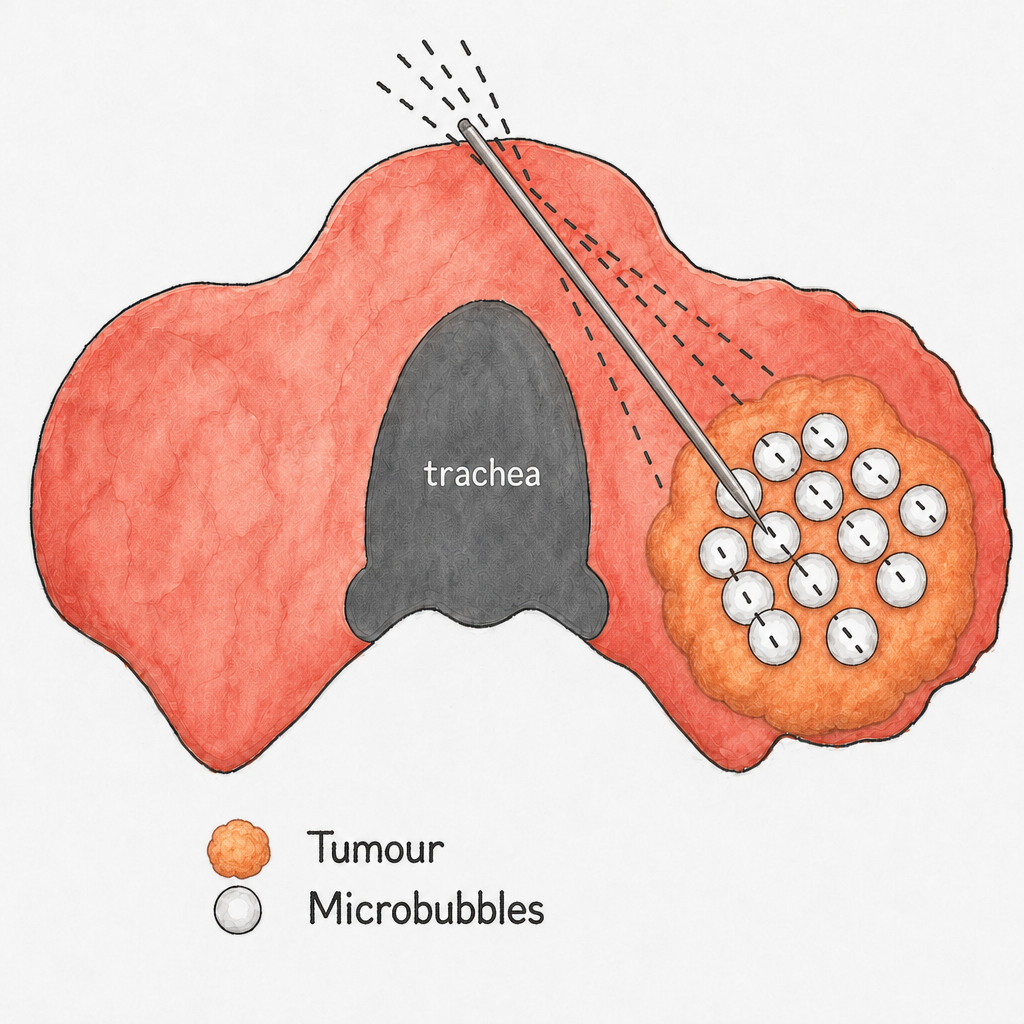
Percutaneous thyroid radiofrequency ablation(RFA) is a minimally invasive, image-guided treatment used to reduce the size of thyroid nodules without surgery.
Under ultrasound guidance, a fine probe is inserted through the skin into the thyroid nodule.
Controlled energy is applied to selectively treat the nodule tissue, leading to gradual shrinkage over time while preserving surrounding normal thyroid.
-
Percutaneous ablation provides an alternative to surgery for selected patients with symptomatic thyroid nodules.
Advantages
No surgical incision
No stitches
Performed under local anaesthesia (± sedation)
Day procedure in most cases
Short recovery time
Preservation of normal thyroid tissue
Lower overall procedural risk compared to surgery
-
Thyroid nodules are common growths within the thyroid gland. They may be:
Solid
Mixed solid and cystic
Cystic (fluid-filled)
Most nodules are benign and often detected incidentally on imaging.
Some nodules may cause:
A visible lump in the neck
Pressure or discomfort
Difficulty swallowing
Cosmetic concerns
-
Percutaneous thyroid ablation may be appropriate for:
Benign thyroid nodules confirmed on biopsy
Nodules causing compression symptoms or cosmetic concern
Patients who prefer to avoid surgery or radioactive iodine treatment
Selected autonomously functioning thyroid nodules (AFTN)
Careful ultrasound assessment and clinical review are essential to determine suitability.
Dr Barry will work closely with your Endocrinologist or Surgeon to discuss the suitability for percutaneous ablation (RFA) in a multidisciplinary setting.
-
Prior to treatment, a number of steps are required to ensure the procedure is safe and appropriate. These can be performed in collaboration with your thyroid specialist(endocrinologist or surgeon)
Confirmation that the nodule is benign (usually with 2 biopsies)
Recent thyroid ultrasound assessment
Review of thyroid function blood tests
Medication review
Discussion of expectations, outcomes, and potential risks
Fasting instructions if sedation is planned
You will receive specific instructions prior to your procedure.
-
The procedure is performed under ultrasound guidance, typically with local anesthesia and/or light sedation.
A small probe is inserted into the nodule
Energy is applied in a controlled manner to treat the entire nodule
For purely cystic nodules, the fluid is aspirated and a portion of the aspirated fluid is replaced with Ethanol which destroys the lining of the cyst preventing recurrence.
The treatment is monitored in real time using ultrasound +/- CT
Voice quality is also monitored throughout the procedure.
After the procedure, an ice pack will be applied to the neck for 30 mins.
The procedure usually takes 30–60 minutes, and patients are discharged the same day.
-
Gradual reduction in nodule size (up to 40% at 3 months and up to 90% volume reduction reported at 36 months)
Improvement in compressive symptoms can be seen as early as 3 months
Improvement in cosmetic appearance can be seen as early as 3 months
For selected autonomously functioning nodules reports suggest a volume reduction of up to 80% may be achieved, which can also improve thyroid hormone levels and functioning.
-
Percutaneous thyroid ablation is very well tolerated. Potential risks include:
Temporary discomfort/pain or swelling
Bruising
Rarely hoarseness or voice change
Incomplete response requiring further treatment
These risks are minimised through careful planning and experienced technique.
-
If you have been diagnosed with a thyroid nodule and would like to avoid surgery, percutaneous thyroid ablation offers a minimally invasive alternative for selected patients.
We are happy to assess your case and help you understand whether this treatment is suitable for you.
Case Study
35 year old female, prone to scarring.
33 mm anterior nodule with a volume of 9 cc.
Wanting to avoid surgery and possibility of post-op scarring.
Thyroid ablation was performed using radiofrequency ablation(RFA).
The procedure was completed under local anaesthesia, and took 40 minutes to perform.
Patient discharged home 30 minutes post-op.
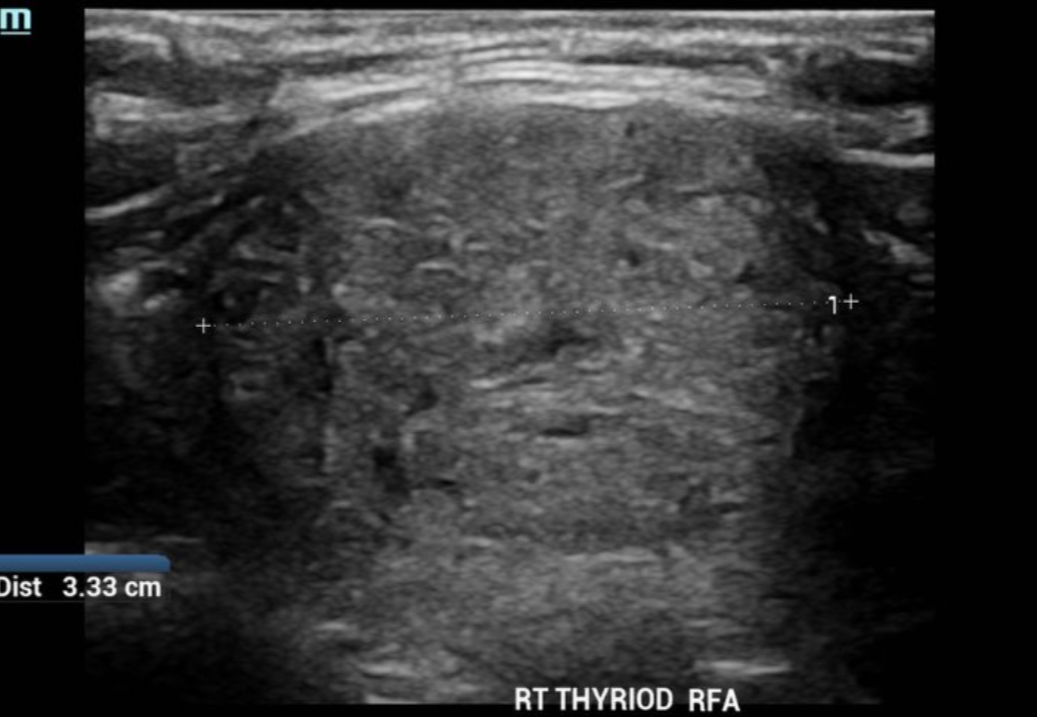
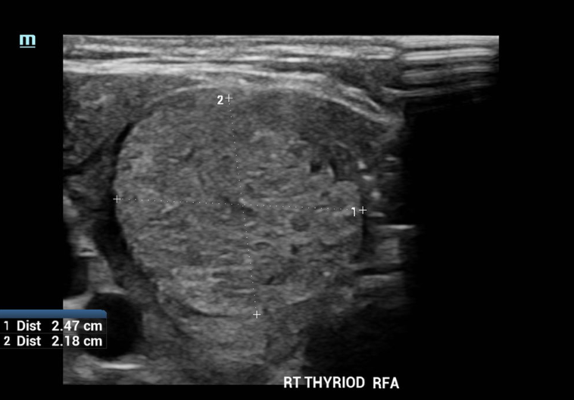
Pre-procedural ultrasound
Nodule measures 33 × 25 × 22 mm
Volume 9 cc
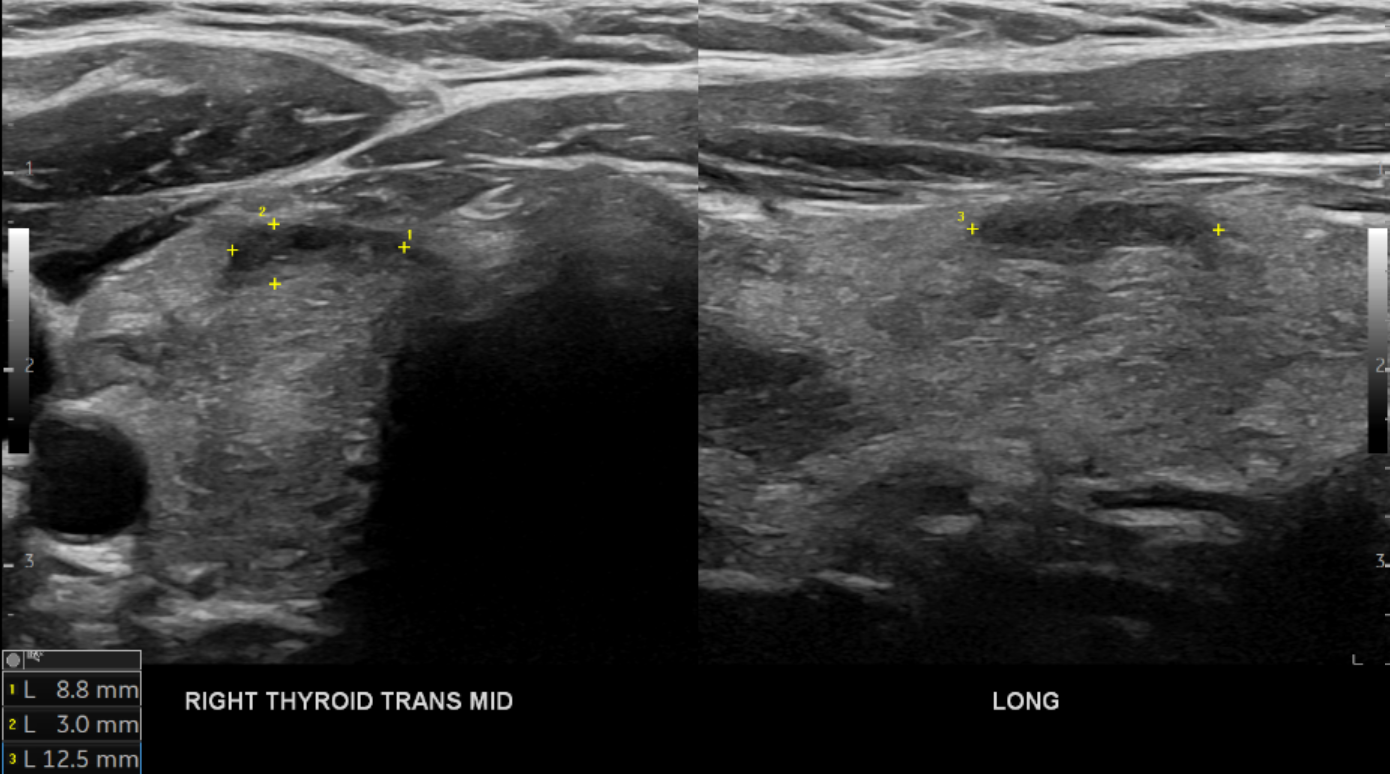
Post-procedural ultrasound after 12 months
Nodule measures 13 × 9 × 3 mm
Volume 0.2 cc
Total volume reduction 98%